Publication

Primer 3- Creativity and Originality in the Age of Generative AI- Prompting as Creative Input

As generative AI systems become increasingly capable of producing text, images, music, and other creative outputs, a fundamental copyright question has moved to the forefront: can prompting itself constitute a creative act? The third primer in The Dialogue’s AI & Copyright series examines how copyright law’s originality requirement applies in an era where human creativity […]

Primer 3- Creativity and Originality in the Age of Generative AI- Prompting as Creative Input Read More ยป

Primer 2 – Human Authorship in Copyright Law

(๐˜ˆ๐˜ & ๐˜Š๐˜ฐ๐˜ฑ๐˜บ๐˜ณ๐˜ช๐˜จ๐˜ฉ๐˜ต ๐˜š๐˜ฆ๐˜ณ๐˜ช๐˜ฆ๐˜ด) Human Authorship in Copyright Law examines one of the most consequential questions emerging in the age of generative AI: can copyright law continue to function without a human author at its centre? As AI systems increasingly generate text, images, music, and audiovisual content with minimal human intervention, longstanding assumptions around originality,

Primer 2 – Human Authorship in Copyright Law Read More ยป

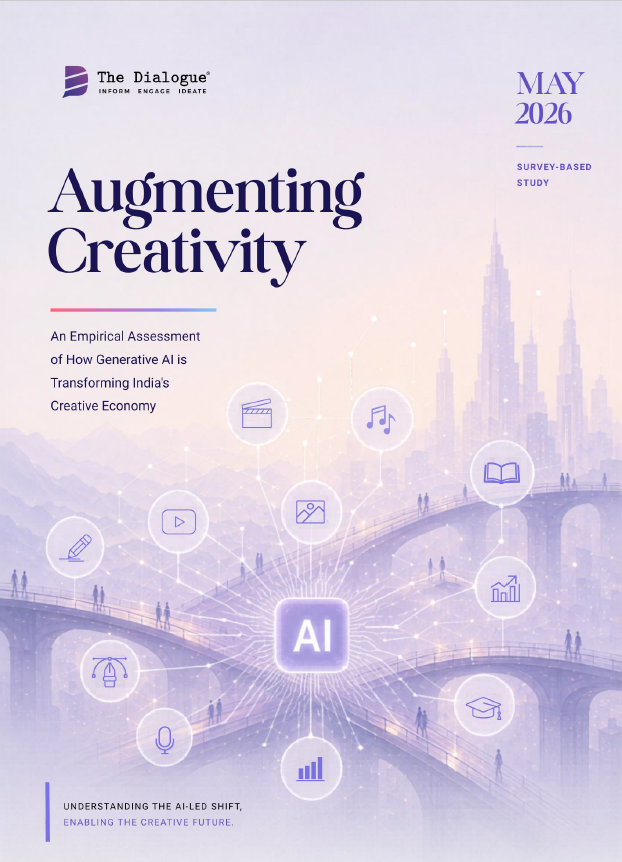
Survey-based Study: Augmenting Creativity: An Empirical Assessment of How Generative AI Is Transforming Indiaโ€™s Creative Economy

Generative AI is rapidly reshaping the economics of creativity. From content production and editing to discoverability, localisation, and monetisation, AI tools are increasingly becoming embedded within the everyday workflows of creators, agencies, musicians, designers, filmmakers, and digital entrepreneurs across India. Against this backdrop, Augmenting Creativity: An Empirical Assessment of How Generative AI Is Transforming Indiaโ€™s

Survey-based Study: Augmenting Creativity: An Empirical Assessment of How Generative AI Is Transforming Indiaโ€™s Creative Economy Read More ยป

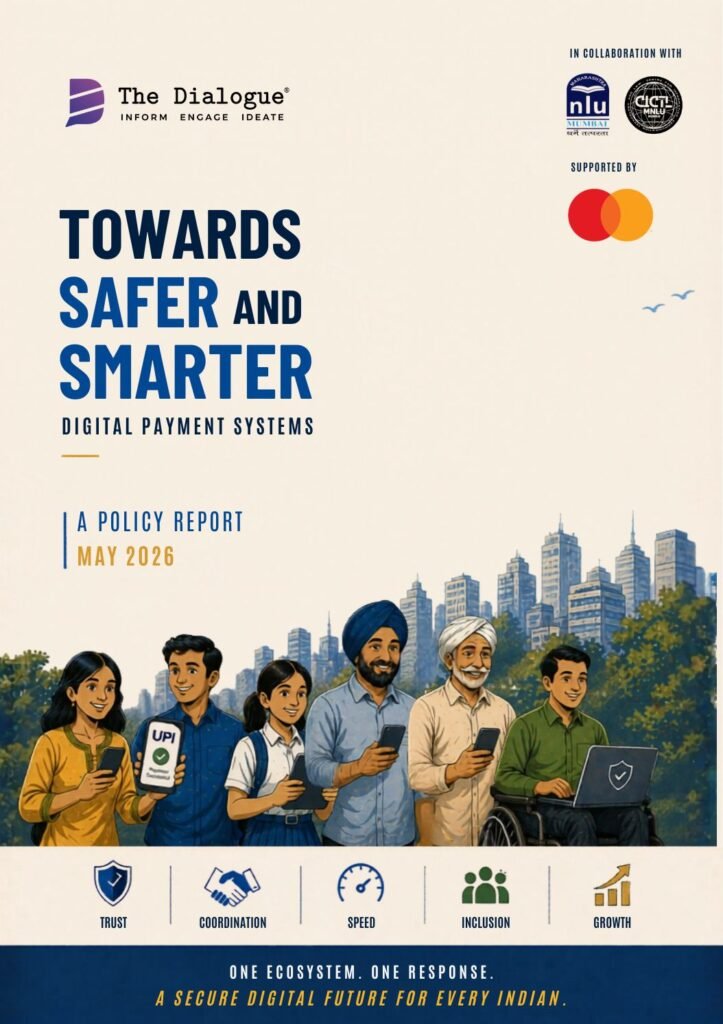
Policy Report- Towards Safer and Smarter Digital Payment Systems

Indiaโ€™s digital payments ecosystem has transformed the way millions transact, accelerating financial inclusion and reshaping the countryโ€™s digital economy. However, the rapid scale of digital payments has also expanded the cyber fraud landscape, with scams becoming increasingly organised, psychologically sophisticated, and technologically enabled. This policy report examines the evolving nature of cyber fraud in India,

Policy Report- Towards Safer and Smarter Digital Payment Systems Read More ยป

Discussion Paper- Greening the Code: A Roadmap for Environmentally Responsible AI Innovation in India

A joint publication by ๐“๐ก๐ž ๐ƒ๐ข๐š๐ฅ๐จ๐ ๐ฎ๐ž and ๐‚๐ก๐ข๐ง๐ญ๐š๐ง ๐‘๐ž๐ฌ๐ž๐š๐ซ๐œ๐ก ๐…๐จ๐ฎ๐ง๐๐š๐ญ๐ข๐จ๐ง As Indiaโ€™s AI ecosystem scales rapidly, the conversation is shifting beyond algorithms and models to the physical infrastructure that sustains them. From data centres and cloud systems to energy, water, and land use, AI growth is increasingly tied to resource-intensive systems that demand careful planning

Discussion Paper- Greening the Code: A Roadmap for Environmentally Responsible AI Innovation in India Read More ยป

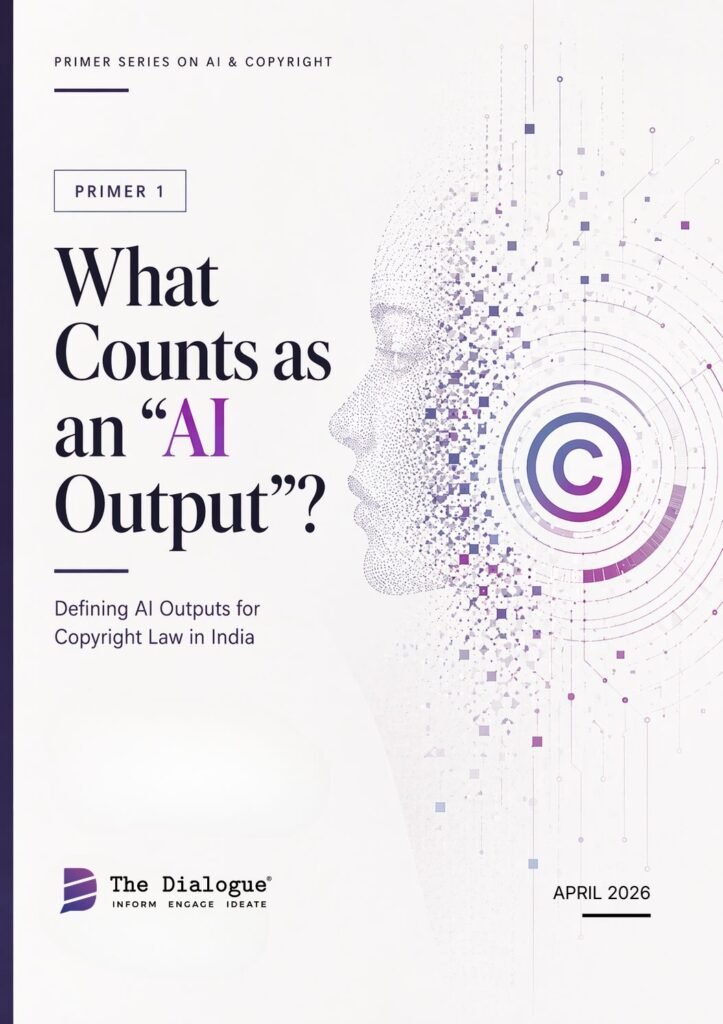
Primer 1: What Counts as an โ€œAI Outputโ€? Defining AI Outputs for Copyright Law in India

Generative artificial intelligence is rapidly transforming how content is created, distributed, and consumed. From text and images to music, code, and video, AI systems are now capable of producing outputs that closely resemble human creativityโ€”often with minimal human intervention. As these capabilities scale, they are raising a foundational legal question:What exactly qualifies as an โ€œAI

Primer 1: What Counts as an โ€œAI Outputโ€? Defining AI Outputs for Copyright Law in India Read More ยป

White Paper- Catalysing Indiaโ€™s Digital Retail Revolution : Revisiting Investment Framework For Quick Commerce

Revisiting the Investment Framework for Quick Commerce Quick commerce (Q-commerce) has emerged as a defining feature of Indiaโ€™s digital retail ecosystem. By enabling rapid delivery of essential goods through hyperlocal supply chains, dark store infrastructure, and technology-enabled logistics, the sector is reshaping consumer behaviour and retail operations across urban India. As adoption accelerates, however, the

White Paper- Catalysing Indiaโ€™s Digital Retail Revolution : Revisiting Investment Framework For Quick Commerce Read More ยป

Policy Brief: From Payments to Prosperity – Expanding Credit on UPI to All Authorised Card Networks

UPI has cemented its position as the cornerstone of Indiaโ€™s digital economy, achieving an unprecedented scale of 20 billion transactions in a single month by mid-2025. As the platform evolves from a facilitator of payments to a comprehensive financial hub, the integration of creditโ€”primarily through RuPay credit cards and the Credit Line on UPI (CLOU)โ€”marks

Policy Brief: From Payments to Prosperity – Expanding Credit on UPI to All Authorised Card Networks Read More ยป

Policy Brief – Policy Prescriptions for Balancing AI and Copyright Concerns

Artificial intelligence is reshaping creative production, dissemination, and consumption at an unprecedented pace. As AI systems increasingly rely on large volumes of data and generate outputs that intersect with protected works, existing copyright frameworks are facing new interpretive and policy challenges. Across jurisdictions, policymakers, courts, creators, and technology developers continue to engage with unresolved questions

Policy Brief – Policy Prescriptions for Balancing AI and Copyright Concerns Read More ยป

Research Paper: Regulating AI Across Borders The EU AI Act, Stakeholder Perspectives, and Indiaโ€™s Approach

Regulating AI Across Borders provides a clear overview of the EU AI Act, its risk-based structure, governance model, and compliance requirements. The publication also examines how industry, civil society, and research communities have responded to the Act. It then outlines Indiaโ€™s current regulatory posture and highlights areas of alignment, divergence, and uncertainty. This summary presents

Research Paper: Regulating AI Across Borders The EU AI Act, Stakeholder Perspectives, and Indiaโ€™s Approach Read More ยป