
Research Report

Building Effective and Harmonised Data Protection Authority: Strategies for Structural Design and Implementation

Currently, in India, regulations pertaining to technology are being made in a disjointed manner under different routes, such as legislation, subordinate rules by the executive, and delegated regulation through sectoral regulators and ministries. This multiplicity in regulations and rules without synergy would cause various problems at the receiving end, like confusion, repetition, over-regulation, compliance burden

Building Effective and Harmonised Data Protection Authority: Strategies for Structural Design and Implementation Read More »

Analysing the Technical Workarounds to End-to-End Encryption

This brief addresses the growing concern of cybercrimes facilitated by end-to-end encryption (E2EE) technology, such as the spread of fake news, child sexual abuse material, and online drug trade. It explores two proposed methods in India to identify wrongdoers using E2EE platforms. First, it explains the functioning of E2EE technology. Then, it delves into the

Analysing the Technical Workarounds to End-to-End Encryption Read More »

Taxation of Digitalised Economy: Analysing the United Nations Article 12B Solution

The United Nations Committee of Experts on International Cooperation in tax matters has approved Article 12B in the UN Model Tax Convention to address the taxation of “automated digital services” (ADS). This addition impacts bilateral tax treaties between contracting states, granting both the residence state and source state taxation rights for ADS income. However, challenges

Taxation of Digitalised Economy: Analysing the United Nations Article 12B Solution Read More »

Enabling A Trillion-Dollar Digital Economy: Interdependent, Interconnected and Digital

Digital technologies are crucial for India to reach its $5 trillion economic goal by 2024. In 2019, the Ministry of Electronics and Information Technology estimated India’s digital economy at $200 billion, with projections to reach $1 trillion by 2025. This digital ecosystem encompasses various sectors like IT-BPM, telecom, e-commerce, digital payments, and more. However, without

Enabling A Trillion-Dollar Digital Economy: Interdependent, Interconnected and Digital Read More »

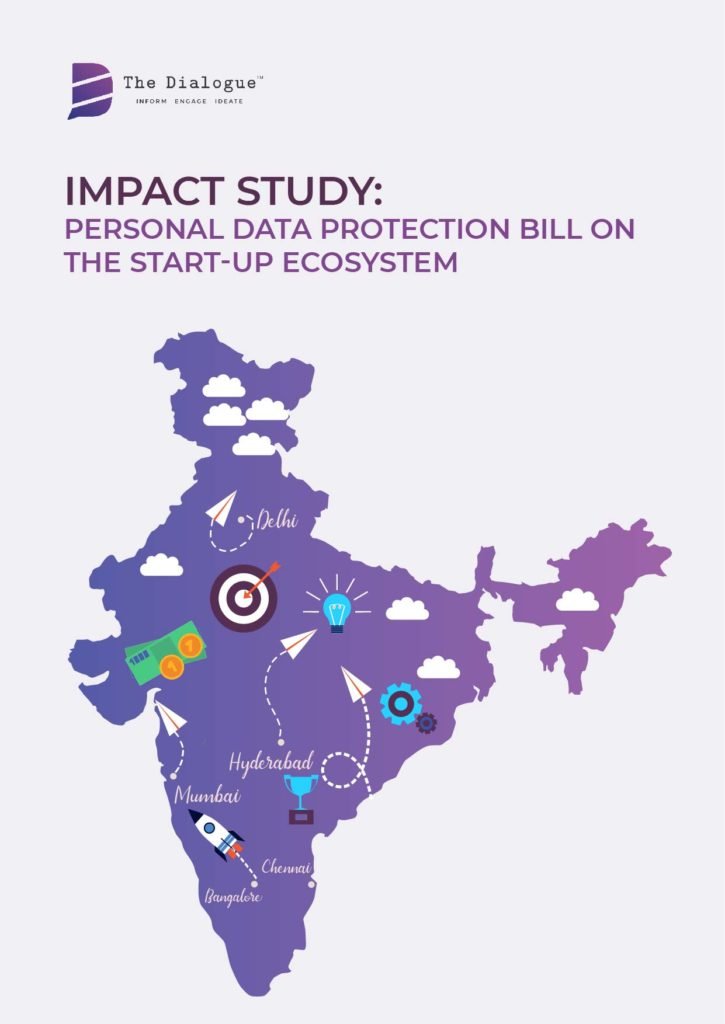
IMPACT STUDY: PERSONAL DATA PROTECTION BILL ON THE START-UP ECOSYSTEM

The Dialogue conducted five stakeholder consultations from March to October on the need for progressive data regulation for Indian startups. These consultations involved 57 startups from various sectors, along with legal experts. India has a growing startup ecosystem, with over 25 unicorns, making it the third-largest globally. However, the proposed Personal Data Protection Bill, 2019,

IMPACT STUDY: PERSONAL DATA PROTECTION BILL ON THE START-UP ECOSYSTEM Read More »

Analyzing the american safe harbour regime

Analysing the American Safe Harbour Regime: Takeaways for India

The rise of technology has brought both empowerment and challenges for marginalized communities. Harassment and harmful content, such as Child Sexual Abuse Material (CSAM) and non-consensual adult material, have emerged as significant concerns. Solutions to combat this problem are under discussion, with questions about the role and liability of intermediaries like network providers, online marketplaces,

Analysing the American Safe Harbour Regime: Takeaways for India Read More »

Equalisation Levy 2020

EQUALISATION LEVY 2020: THE NEED TO REVISIT INDIA’S NEW DIGITAL TAX

India’s digital ecosystem, vital for its economy, has faced a recurring issue of burdensome taxation. The Finance Bill of 2020 introduced a sudden amendment imposing a 2% equalization levy on e-commerce operators without prior stakeholder consultation, resulting in a provision fraught with ambiguity. The lack of clarifications has led even unintended companies to bear this

EQUALISATION LEVY 2020: THE NEED TO REVISIT INDIA’S NEW DIGITAL TAX Read More »

Industrial Revolution 4.0 and the Impact on Information Technology Service Sector

This report examines the impact of Industrial Revolution 4.0 on the IT/IT-es sector in India, utilizing qualitative research methods, including document analysis and interviews. It identifies key stakeholders, contextualizes the sector’s work, and relates it to the factors driving change. The report discusses labor law reforms in India, emphasizing their potential shortcomings in addressing the

Industrial Revolution 4.0 and the Impact on Information Technology Service Sector Read More »